Júlia Giffron
Branding | UX/UI | Crafts
JúliaGiffron
This is my portfolio, and I made it myself!Yes. In Figma.

DASA | The largest integrated healthcare network in Brazil
Design System, UI, E-mail Marketing
Context
The development of a design system for a network of hospitals and laboratories integrated into DASA’s healthcare system.
Team
Solo project developed that served as a foundation for several other teams, including CRM, Performance, and Social Media.
Company
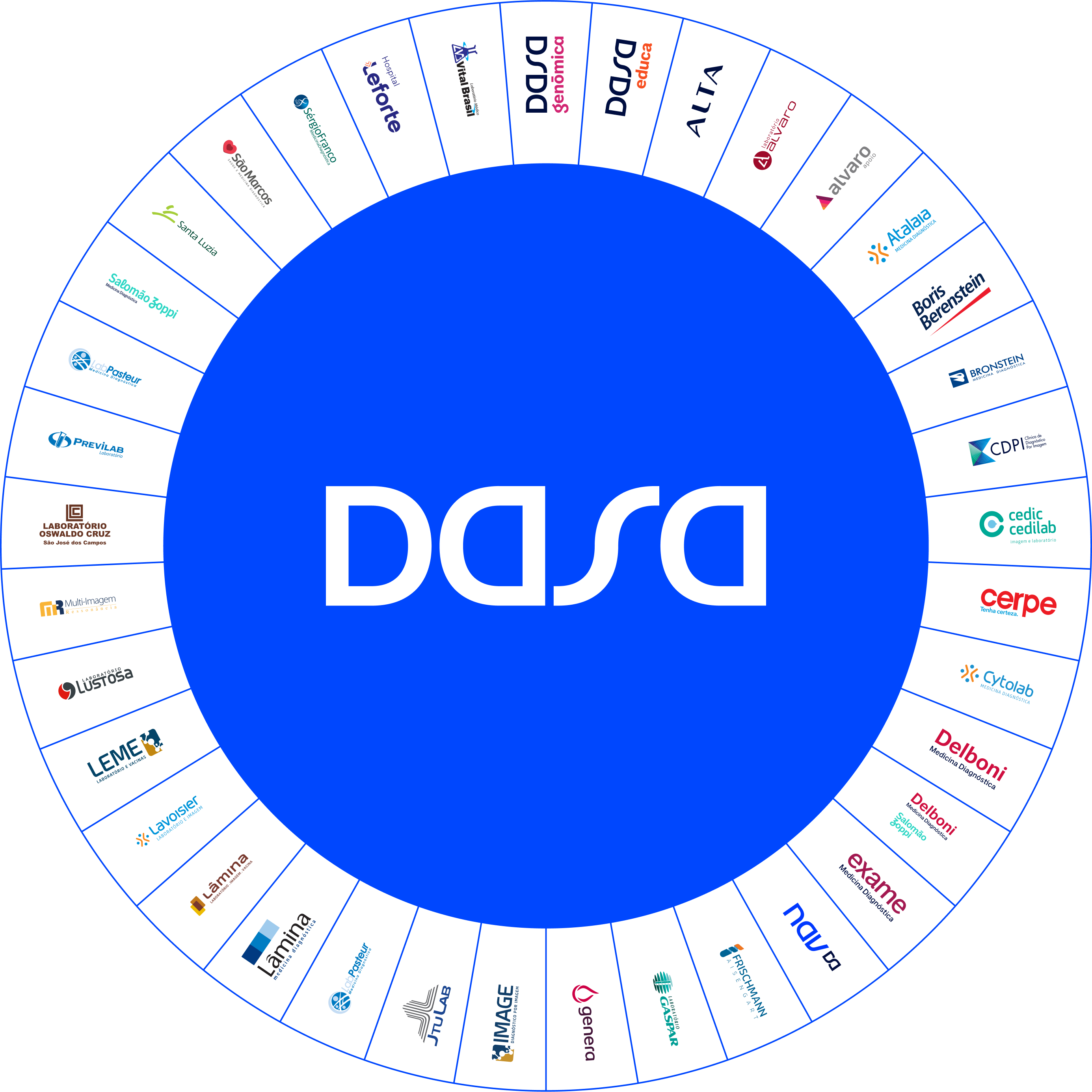
40 brands, including diagnostic medicine, laboratories, and hospitals, distributed across morethan 900 units in Brazil.
Design System
My role was the development of the Design System for the healthcare ecosystem, for brands such as Alta,Cerpe, Dasa, Delboni, Genera, Lavoisier, and 34 other brands. I was focused on achieving the objective of:
Colors
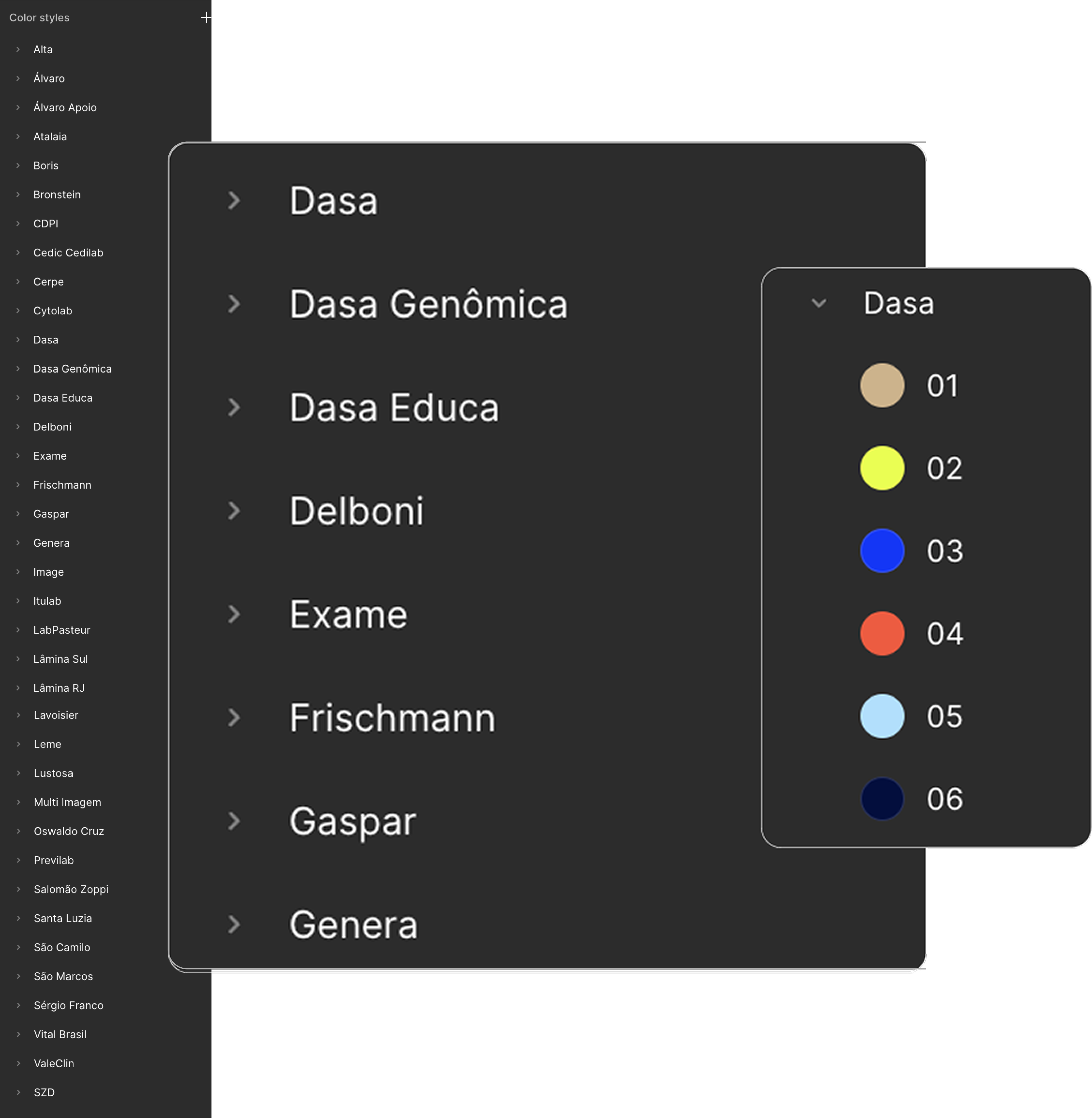
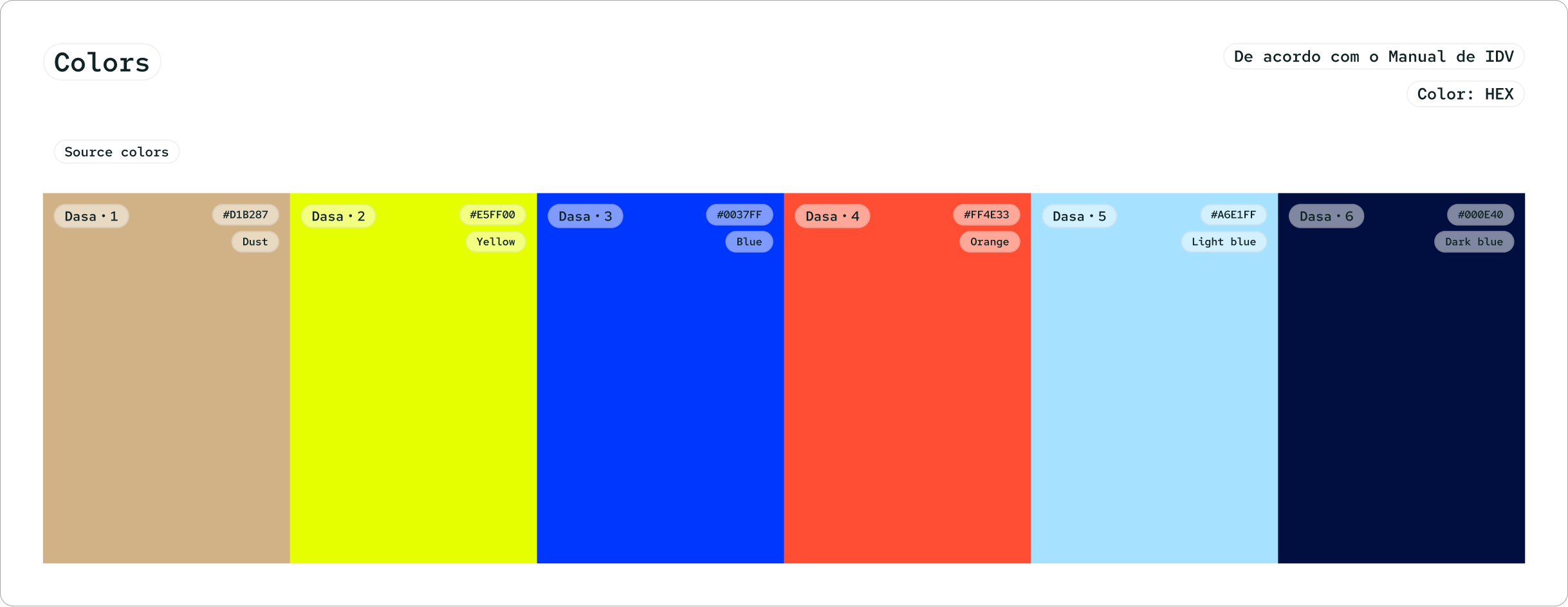
All colors were extracted from each brand’s visual identity guidelines and converted into components.To ensure quick usability, they were organized into groupsand listed alphabetically, making it easier for teamsto search and apply them.
Typography
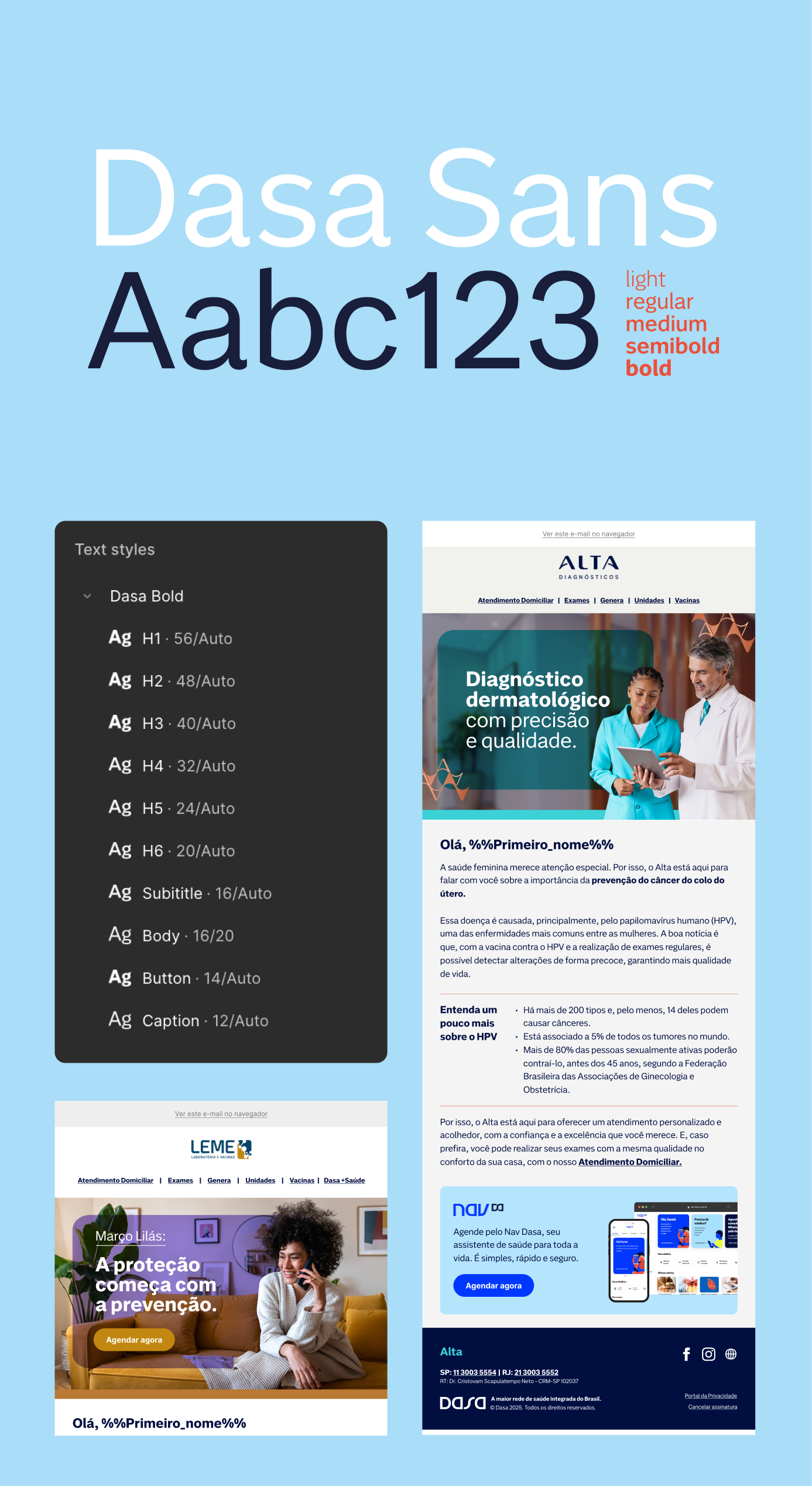
Dasa Font is the proprietary typefaceof the system. It was organized into components with a clear hierarchyand well-defined styles, with a primary focus on email marketing, which guides much of the visual structure.
Design Tokens
Tokens are the smallest design decisions applied to visual elements.They ensure visual consistency and make interface development faster and more efficient.
Multi-brand libraries
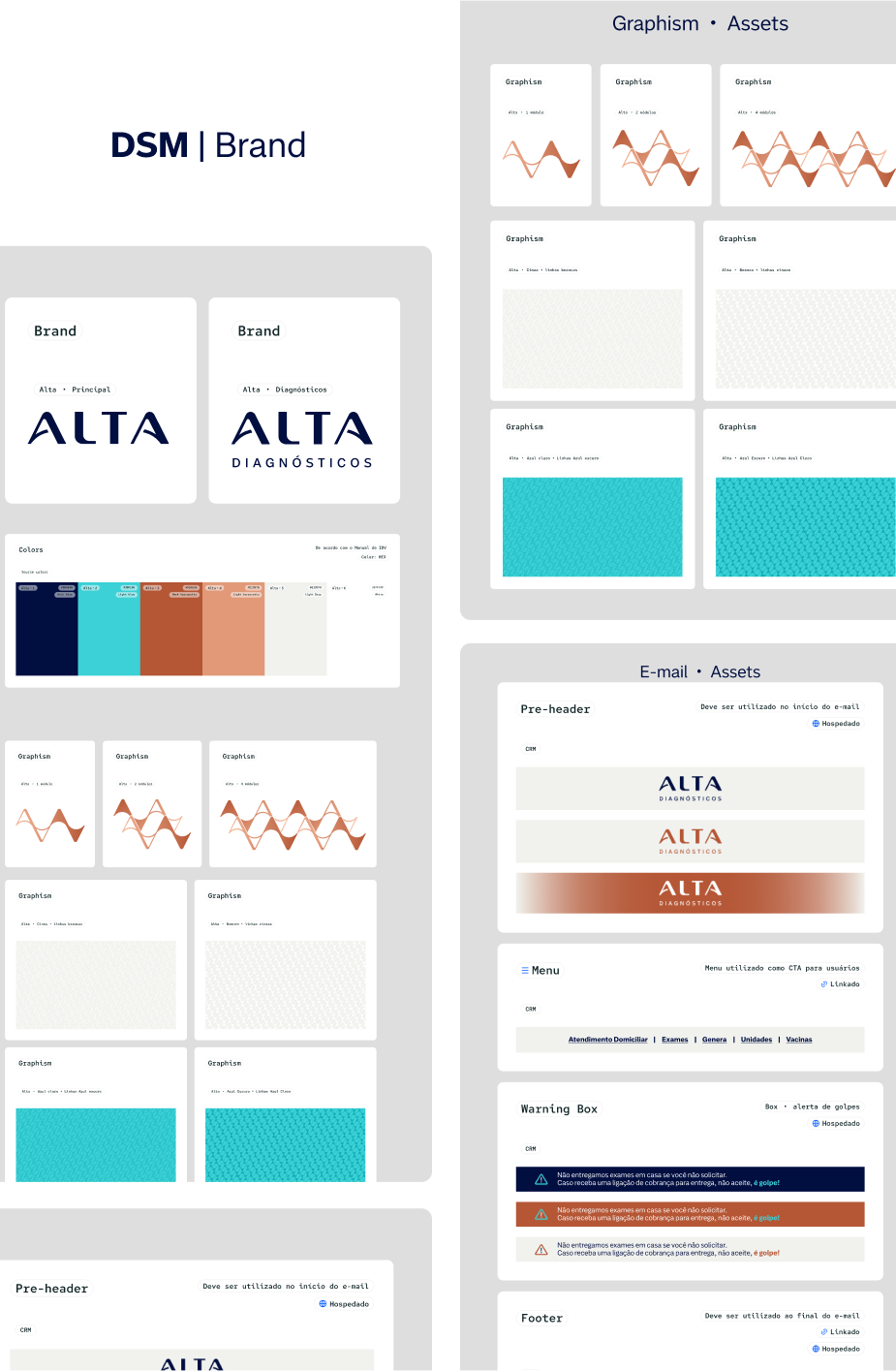
All colors were extractedfrom each brand’s visualidentity guidelines and converted into components.To ensure quick usability,they were organized intogroups and listed alphabetically,making it easier for teamsto search and apply them.
Components
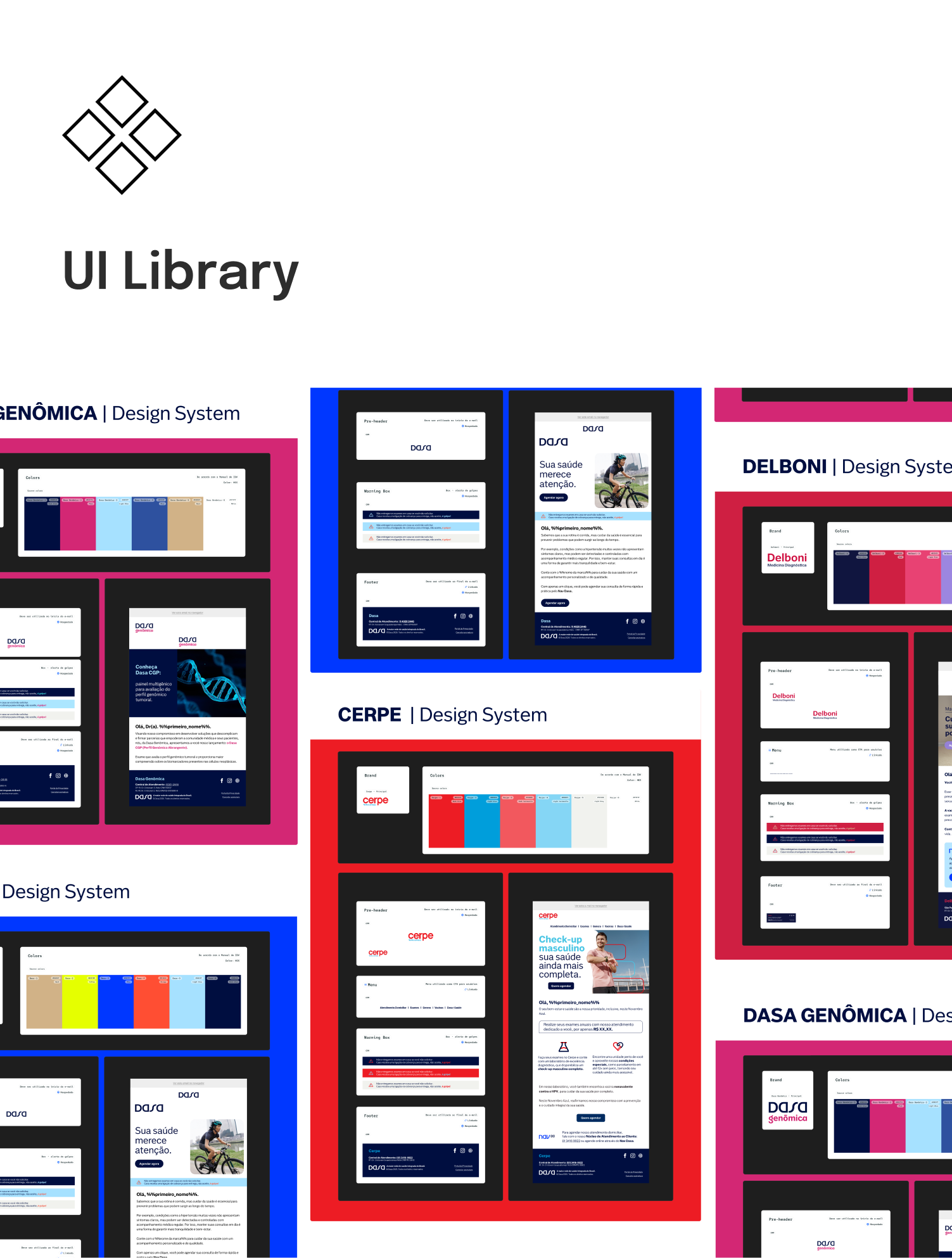
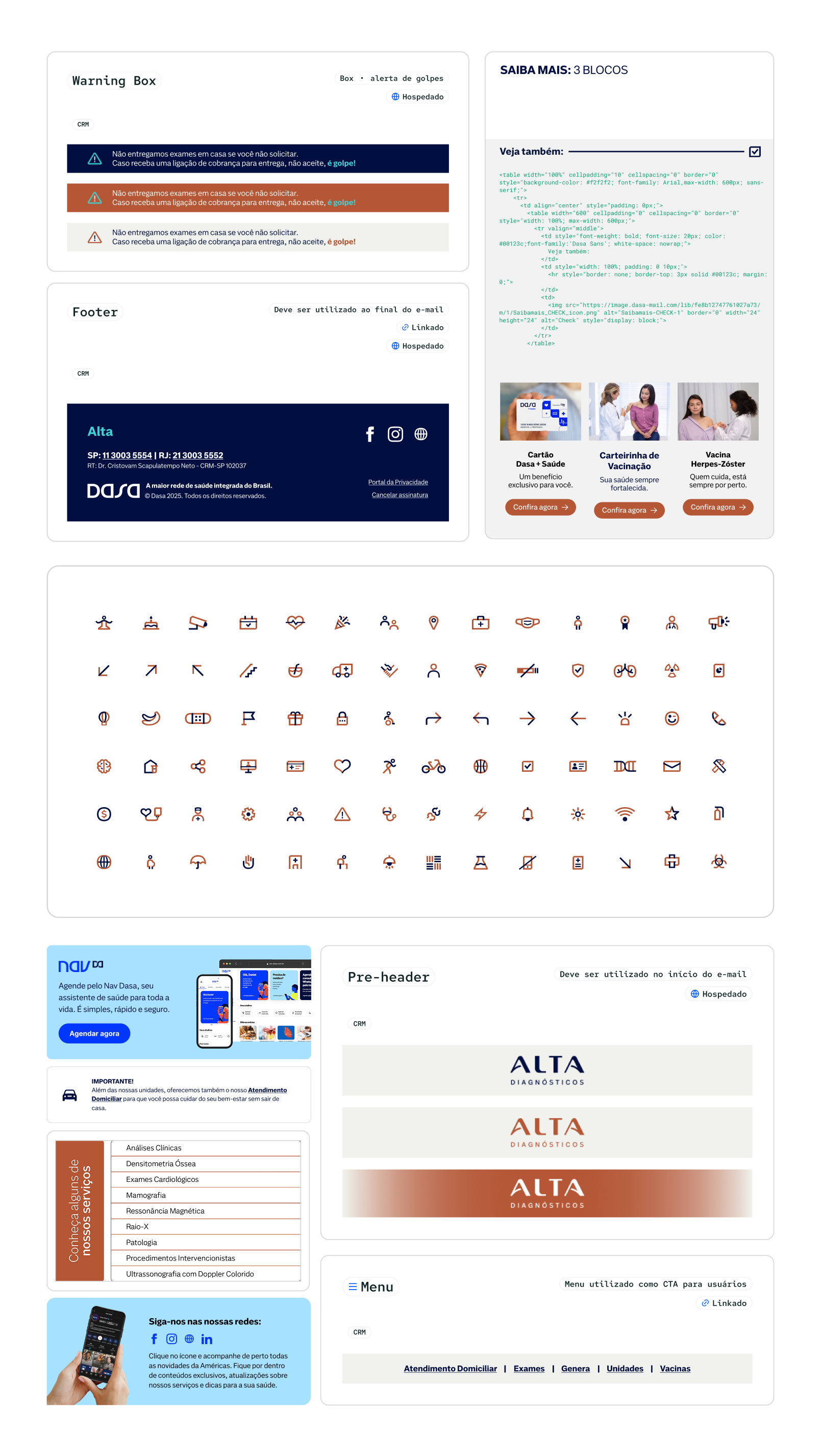
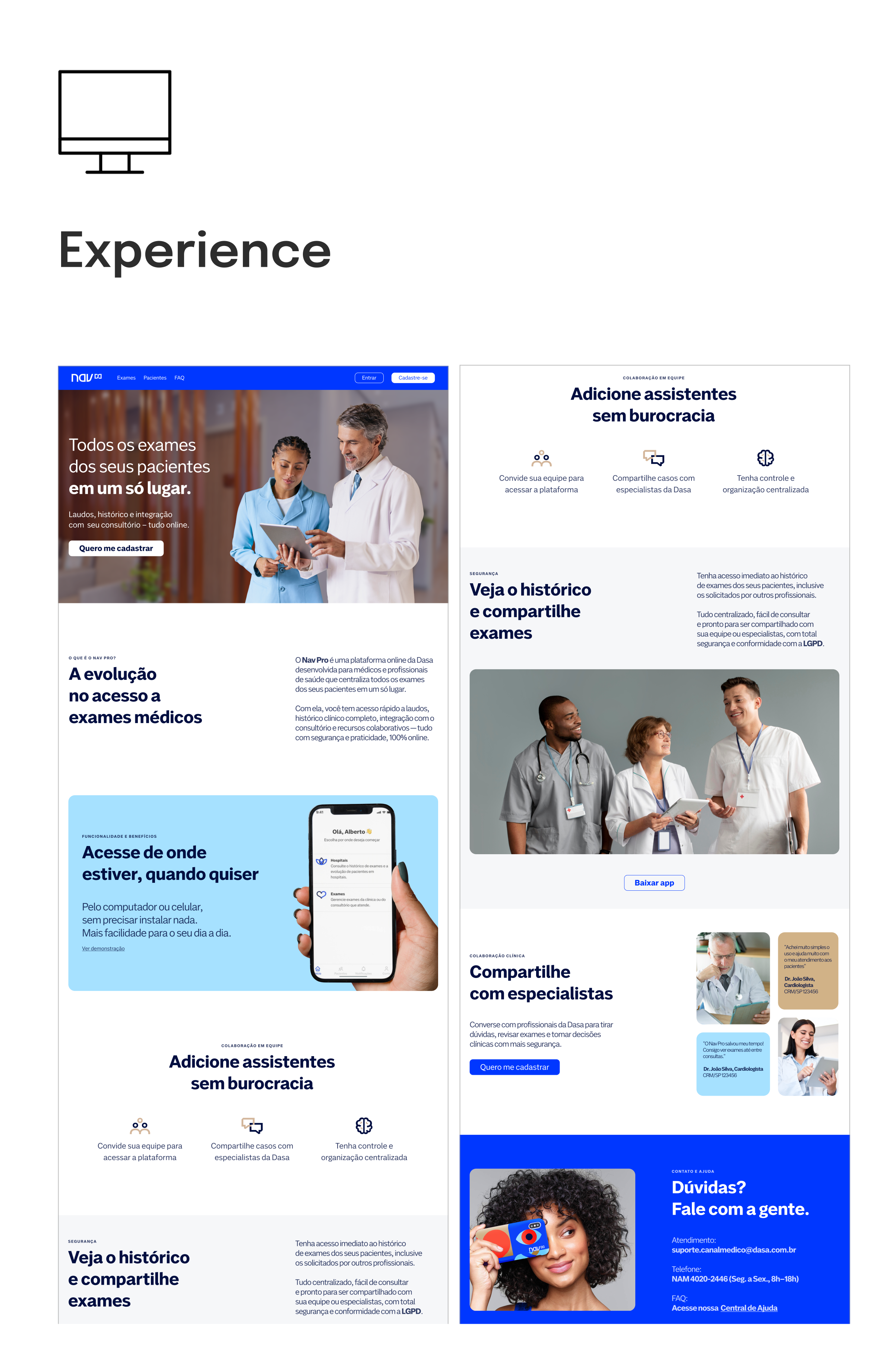
Components are central elements of a Design System. For the brands, several key components were developed,decentralizing tactical layout decisions within squads and allowing teams to focus on strategic initiatives andcompany goals. Each component addresses a specific interface challenge.Together, they create a scalable and harmonious design, making the daily development of products, projects,and services more agile, consistent,and efficient.
Ensuring the Design Practices
To ensure that the objectives were met, processes were establishedto facilitate the adoption and useof the Design System.
The Design System is usedby designers, art directors,and developers for creatingwebsites, social media content,email marketing, and other projects.
Performance Metrics
The Design System is an inherently complex product, makingthe measurement of metrics, especially in an automated way,a significant challenge.As it directly impacts team performance and product consistency, a careful approachis required to understand its effect. After analysis and experimentation, the most effective model adoptedto evaluate the performanceand effectiveness of theDesign System was:
Feedback
Thomás Basile
Designer and Art Director at Wigoo,CRM Team – DASA
The Design System developed wasa game-changer for both the client and our team’s workflow.In a short time, we noticed a significant improvement in delivery speed, consistency of the created assets, and a reduction inclient-requested revisions.
Having followed the projectfrom concept to implementation,I witnessed firsthand the excellent work she delivered and her dedication to providing a model that is intuitive, visually appealing, and exceptionally clear for the designers using it.
Júlia Giffron
Branding | UX/UI | Crafts
JúliaGiffron
This is my portfolio, and I made it myself!Yes. In Figma.
DASA | The largest integrated healthcare network in Brazil
Design System, UI, E-mail Marketing
Context
The development of a design system for a network of hospitals and laboratories integrated into DASA’s healthcare system.
Team
Solo project developed that served as a foundation for several other teams, including CRM, Performance, and Social Media.
Company
40 brands, including diagnostic medicine, laboratories, and hospitals, distributed across morethan 900 units in Brazil.
Design System
My role was the development of the Design System for the healthcare ecosystem, for brands such as Alta, Cerpe, Dasa, Delboni, Genera, Lavoisier, and 34 other brands.I was focused on achieving the objective of:
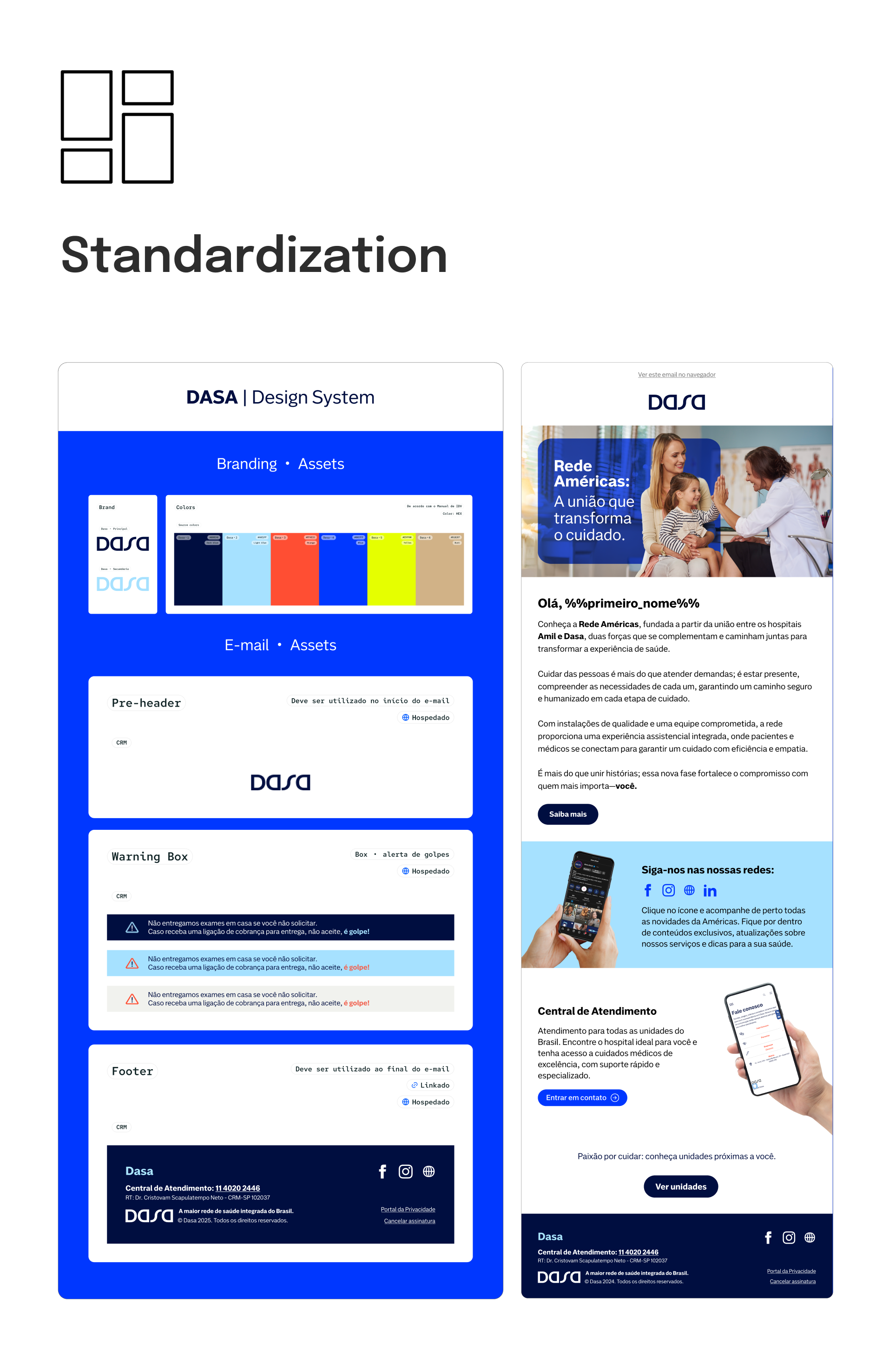
Standardization

UI Library
Experience

Efficiency
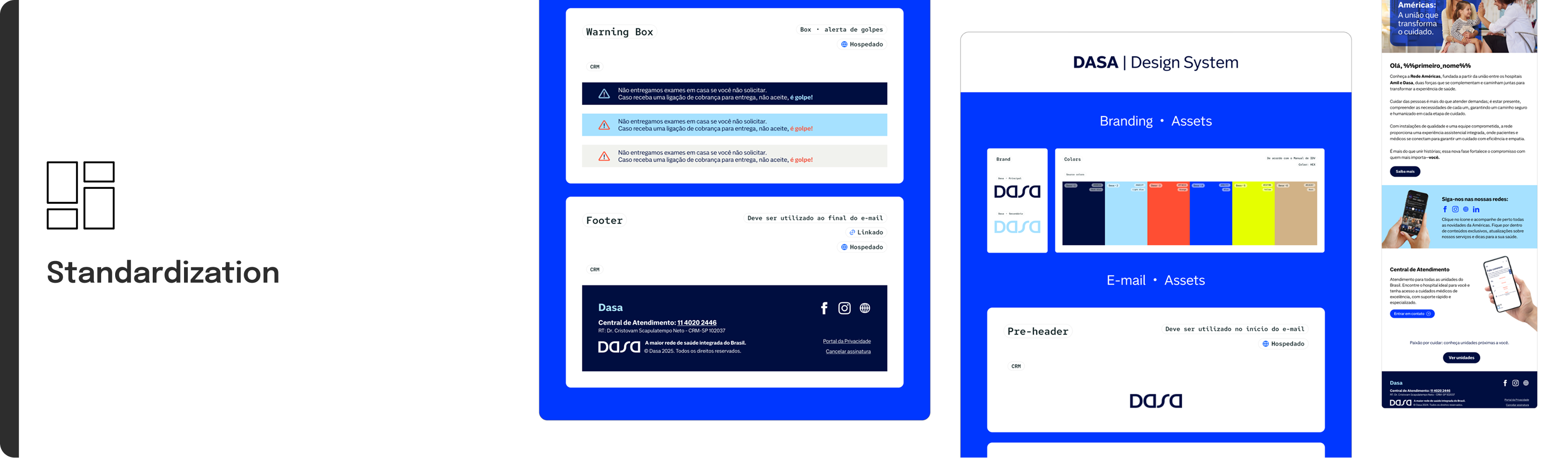
Colors
All colors were extracted from each brand’s visual identity guidelines and converted into components.To ensure quick usability, they were organized into groupsand listed alphabetically, making it easier for teamsto search and apply them.
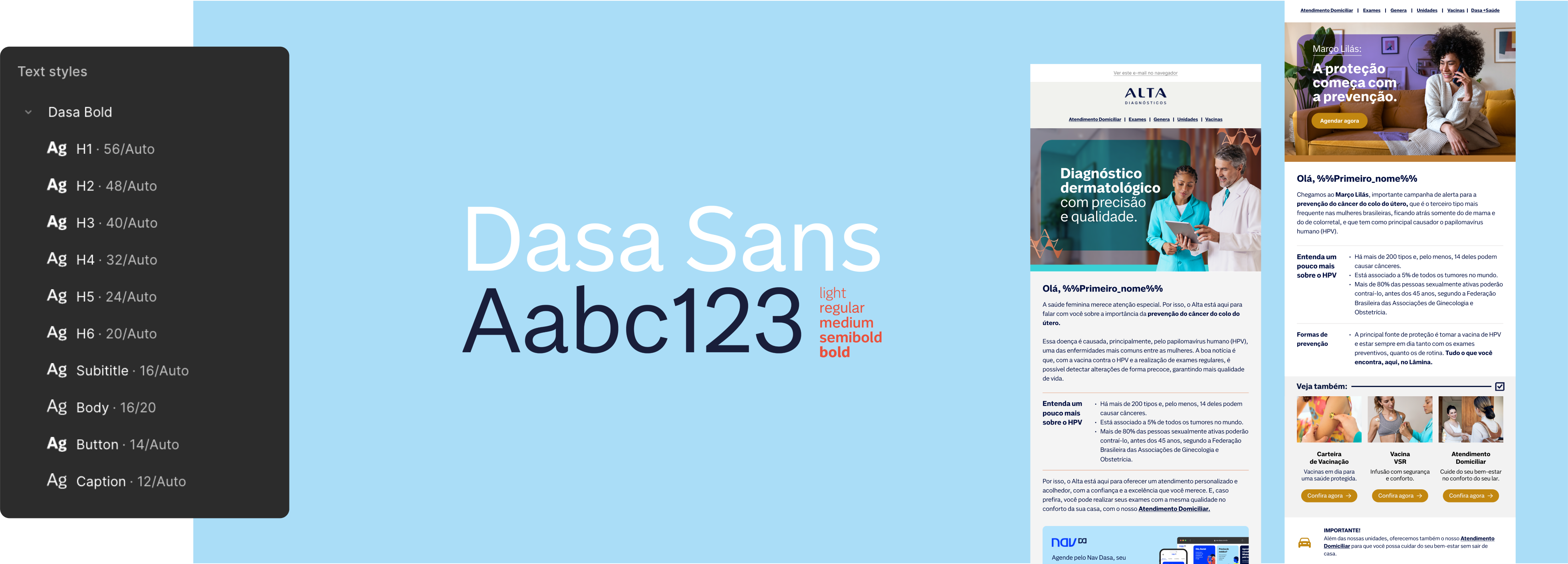
Typography
Dasa Font is the proprietary typeface of the system. It was organized into components with a clear hierarchy and well-defined styles, with a primary focus on email marketing, which guides much of the visual structure.
Design Tokens
Tokens are the smallest design decisions applied to visual elements. They ensurevisual consistency and make interface development faster and more efficient.
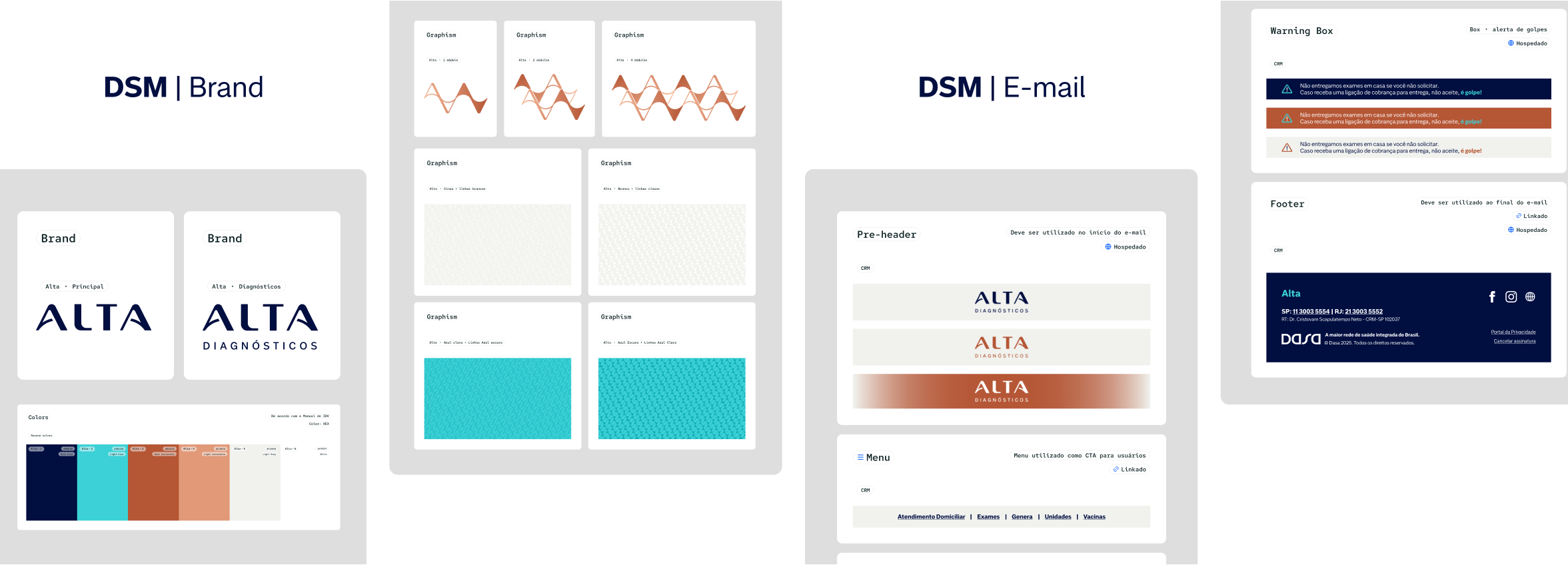
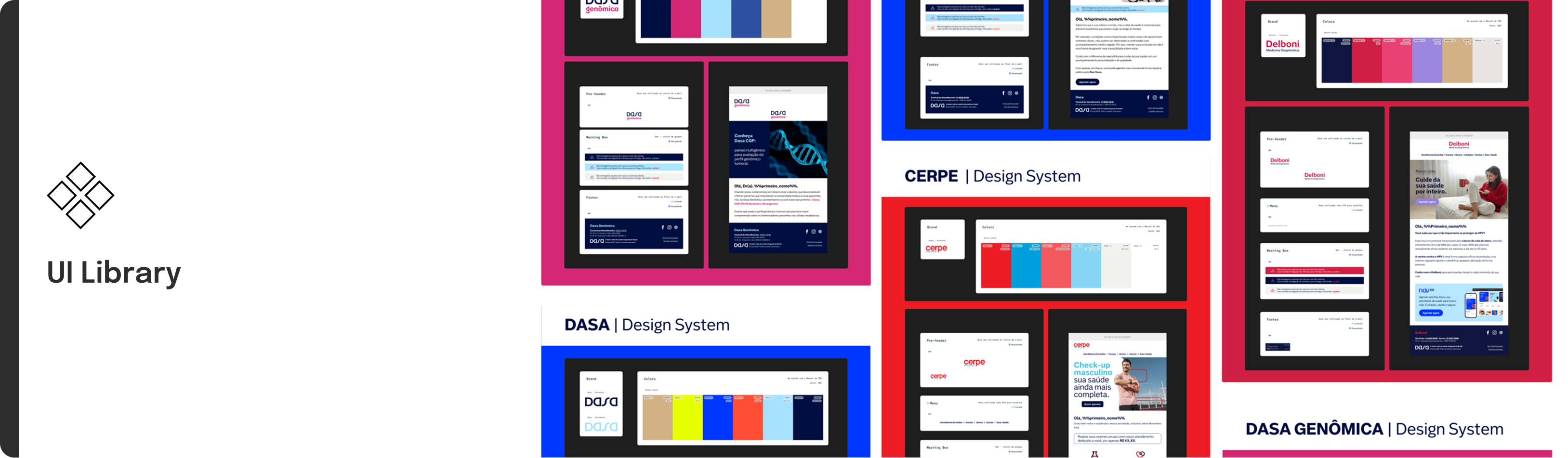
Multi-brand libraries
All colors were extracted from each brand’s visual identity guidelinesand converted into components.To ensure quick usability, they were organized into groups and listed alphabetically, making it easierfor teams to search and apply them.
Components
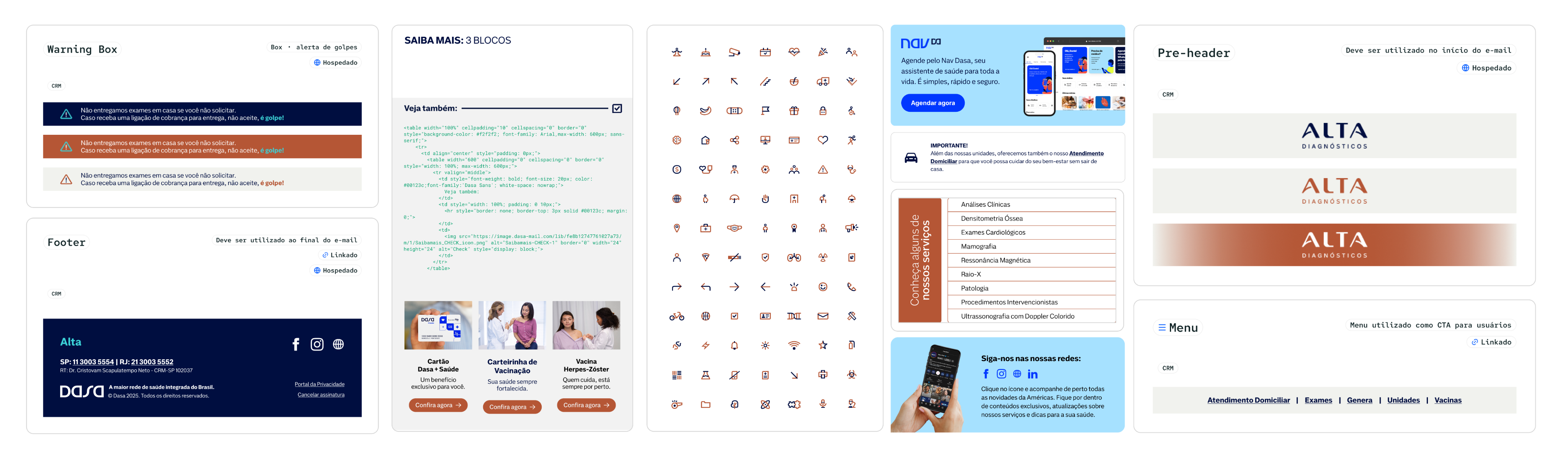
Components are central elements of a Design System. For the brands, severalkey components were developed, decentralizing tactical layout decisions withinsquads and allowing teams to focus on strategic initiatives and company goals.Each component addresses a specific interface challenge.Together, they create a scalable and harmonious design, making the dailydevelopment of products, projects, and services more agile, consistent, and efficient.
Ensuring the Design Practices
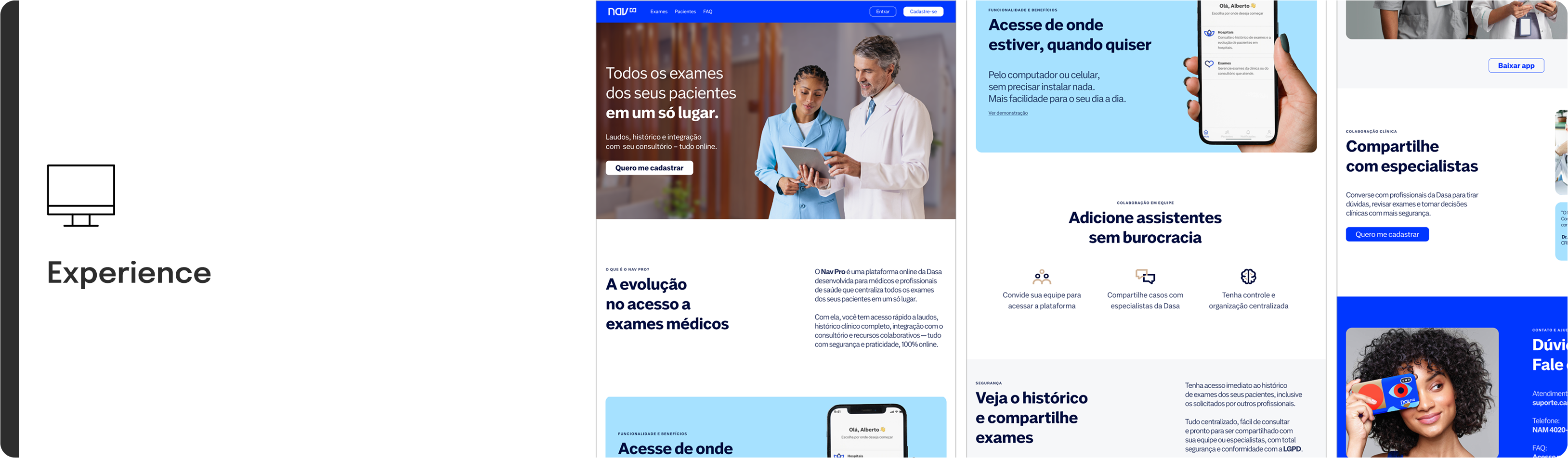
To ensure that the objectives were met, processes were establishedto facilitate the adoption and use of the Design System.
The Design System is used by designers, art directors, and developers for creating websites, social media content,email marketing, and other projects.
DesignCritique
One-on-One Evaluations

Help &Support

TeamCheck-ins
Performance Metrics
The Design System is an inherently complex product, making the measurementof metrics, especially in an automated way,a significant challenge.As it directly impacts team performance and product consistency,a careful approach is required to understand its effect. After analysisand experimentation, the most effective model adopted to evaluatetheperformance and effectiveness of the Design System was:
Adoption
Are users aware it exists?
Have they started using it?

Task Success
Can they use it?
Did they use it correctly?
Retention
Are they still using it?
Is it proving effective?
Feedback
Thomás Basile
Designer and Art Director at Wigoo, CRM Team – DASA
The Design System developed was a game-changer for both the client and our team’s workflow.In a short time, we noticed a significant improvement in delivery speed, consistencyof the created assets, and a reduction in client-requested revisions.
Having followed the project from concept to implementation, I witnessed firsthandthe excellent work she delivered and her dedication to providing a model that is intuitive,visually appealing, and exceptionally clear for the designers using it.
Brand Design
Brand, Packaging,Wayfinding, Naming
Ux | Ui
Design System, EmailMarketing, Websites
Visual & Craft
Illustration, Mascots,Creative, Handmade Work
Júlia Giffron
Branding | UX/UI | Crafts
JúliaGiffron
This is my portfolio, and I made it myself!Yes. In Figma.
DASA | The largest integrated healthcare network in Brazil
Design System, UI, E-mail Marketing
Context
The development of a designsystem for a network ofhospitals and laboratoriesintegrated into DASA’shealthcare system.
Team
Solo project developedthat served as a foundation
for several other teams, including CRM, Performance, and Social Media.
Company
40 brands, includingdiagnostic medicine, laboratories, and hospitals, distributed across morethan 900 units in Brazil.
Design System
My role was the development of the Design System for the healthcare ecosystem, for brands such as Alta,Cerpe, Dasa, Delboni, Genera, Lavoisier, and 34 other brands. I was focused on achieving the objective of:
Standardization
UI Library
Experience
Efficiency
Colors
All colors were extracted from each brand’s visual identity guidelines and converted into components.To ensure quick usability, they were organized intogroups and listed alphabetically, making it easierfor teams to search and apply them.
Typography
Dasa Font is the proprietary typeface of the system. It was organized into components with a clear hierarchyand well-defined styles, with a primary focus on email marketing, which guides much of the visual structure.
Design Tokens
Tokens are the smallest design decisions applied to visual elements.They ensure visual consistency and make interface development faster and more efficient.
Multi-brand libraries
All colors were extracted from each brand’s visual identity guidelines and converted into components.To ensure quick usability, they were organized into groupsand listed alphabetically, making it easier for teamsto search and apply them.
Components
Components are central elements of a Design System. For the brands, several key components were developed,decentralizing tactical layout decisions within squads and allowing teams to focus on strategic initiatives andcompany goals. Each component addresses a specific interface challenge.Together, they create a scalable and harmonious design, making the daily developmentof products, projects, and services more agile, consistent, and efficient.
Ensuring the Design Practices
To ensure that the objectives were met, processes were established to facilitate the adoption and use of the Design System.
The Design System is used by designers, art directors, and developers for creating websites, social media content,email marketing, and other projects.
DesignCritique
One-on-One Evaluations
Help &Support
TeamCheck-ins
Performance Metrics
The Design System is an inherently complex product, making the measurementof metrics, especially in an automated way, a significant challenge.As it directly impacts team performance and product consistency, a careful approach is requiredto understand its effect. After analysis and experimentation, the most effective model adoptedto evaluate the performance and effectiveness of the Design System was:
Adoption
Are users aware it exists?
Have they started using it?
Task Success
Can they use it?
Did they use it correctly?
Retention
Are they still using it?
Is it proving effective?
Feedback
Thomás Basile
Designer and Art Director at Wigoo, CRM Team – DASA
The Design System developed was a game-changer for both the client and our team’s workflow.In a short time, we noticed a significant improvement in delivery speed, consistencyof the created assets, and a reduction in client-requested revisions.
Having followed the project from concept to implementation, I witnessed firsthandthe excellent work she delivered and her dedication to providing a model that is intuitive,visually appealing, and exceptionally clear for the designers using it.